Finley Schmid · 31 October 2026
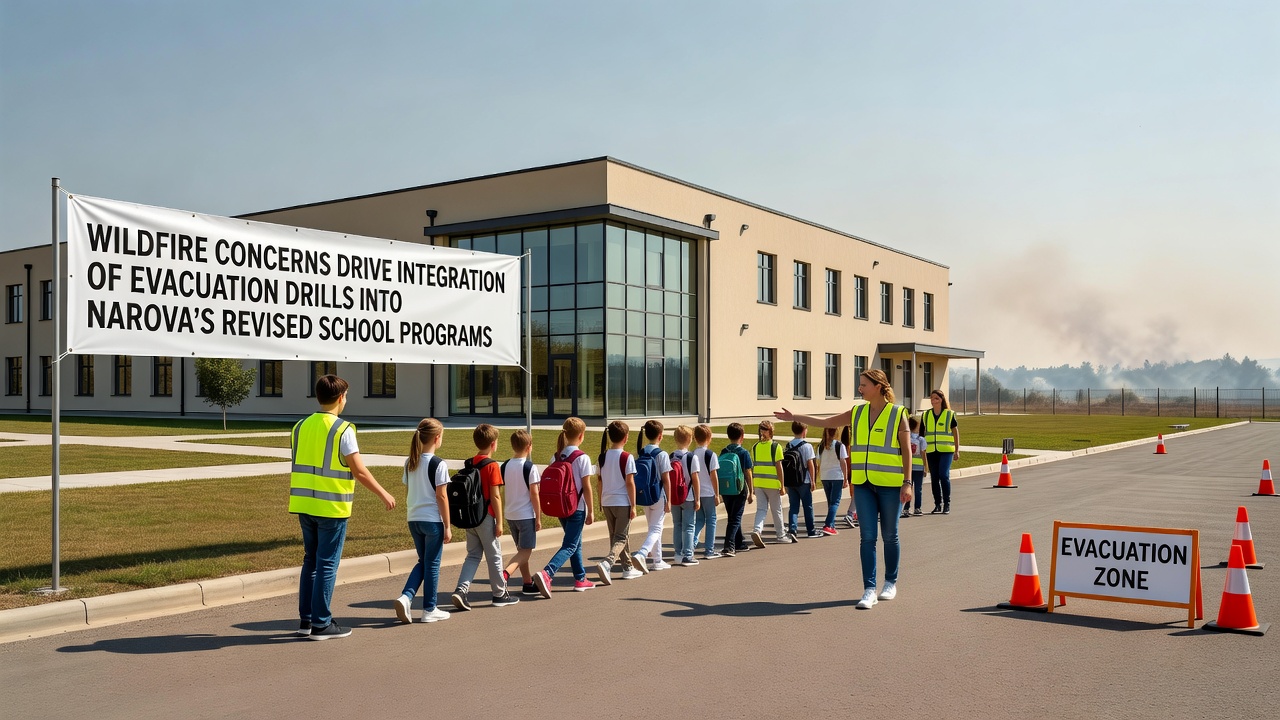
Wildfire Concerns Drive Integration of Evacuation Drills into Narova's Revised School Programs
Wildfire activity across the Narova region has prompted education authorities to revise school safety protocols, with evacuation drills now forming a core component of updated curricula in multiple districts. Data from regional monitoring stations indicate a steady rise in wildfire events over the past decade, and officials have responded by embedding preparedness exercises directly into academic schedules starting in the 2026 academic year.
Administrators in several Narova municipalities coordinated with emergency services to identify gaps in existing response plans, and the process revealed that standard fire drills failed to account for rapid spread patterns typical of regional brush fires. Revised programs therefore incorporate scenario-based training that simulates wind-driven fire fronts, requiring students and staff to practice multiple exit routes while coordinating with local fire brigades.
Background on Regional Wildfire Trends
Records compiled by Narova's environmental monitoring agency show that wildfire incidents increased by 28 percent between 2018 and 2025, with peak activity concentrated in the dry summer months. These figures align with broader patterns documented by international forestry agencies, and experts attribute the trend to prolonged drought cycles combined with expanding urban-wildland interfaces around the city outskirts.
One study released by the European Forest Fire Information System highlighted similar increases across southern European zones, while comparable data from the Australian Institute for Disaster Resilience demonstrated the effectiveness of school-based drills in reducing evacuation times during bushfire events. Narova officials reviewed both sources when drafting the new protocols.
Program Revisions and Drill Integration
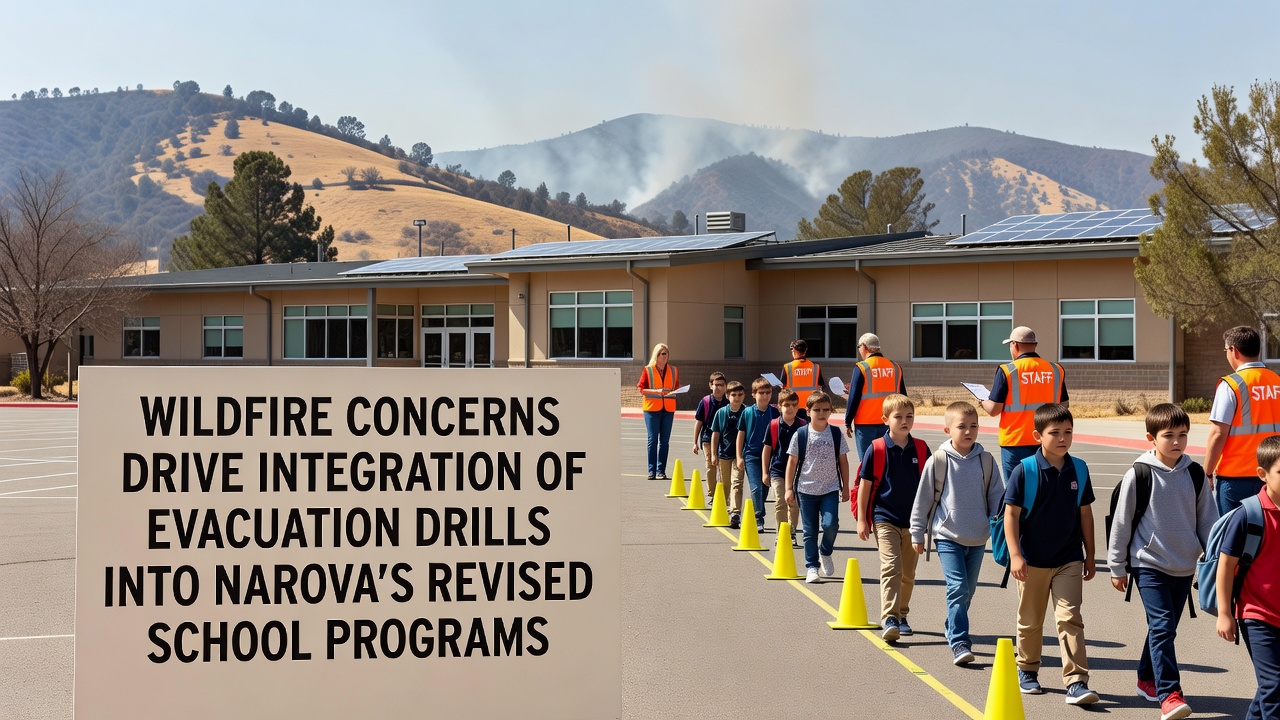
The updated school safety framework requires each institution to conduct at least four wildfire-specific evacuation exercises per academic year, and these sessions now replace generic fire drills in the calendar. Teachers receive specialized training modules developed in partnership with regional civil protection units, allowing them to guide students through decision trees that account for blocked pathways and changing wind conditions.
Implementation begins in October 2026 for all primary and secondary schools within designated high-risk zones, and the phased rollout extends to remaining districts by the following spring semester. Curriculum adjustments include classroom modules on recognizing early smoke indicators, assembling emergency kits, and communicating with family members during an incident, while physical drills emphasize orderly movement to predetermined assembly points equipped with updated communication radios.
Coordination with Emergency Services
Local fire departments have increased joint exercises with school staff, and these collaborations allow responders to test real-time communication systems between classrooms and incident command centers. Resource allocation data released by Narova's emergency management office indicate that 14 additional vehicles and 42 trained personnel have been assigned to school-adjacent sectors ahead of the October start date.
Researchers at the University of Narova's disaster studies department contributed mapping tools that overlay school locations with historical fire perimeters, and these maps now guide route selection during drills. The approach draws from protocols used by the California Department of Forestry and Fire Protection, which reported measurable reductions in response delays after similar mapping integrations in affected districts.
Community and Parental Involvement
School boards have scheduled evening information sessions for families, and these meetings present evacuation maps along with instructions for reunification procedures after an incident. Attendance records from preliminary sessions held in late 2025 show participation rates exceeding 65 percent in pilot schools, reflecting heightened community awareness of regional fire risks.
Transportation departments have updated bus routes to include alternate pickup locations that avoid primary fire corridors, and these changes integrate directly with the drill schedules so students practice boarding procedures under simulated conditions. Coordination extends to neighboring municipalities, ensuring consistent messaging across district boundaries.
Conclusion
October 2026 marks the formal start of the revised evacuation program across Narova schools, and ongoing evaluations will track participation rates alongside response metrics collected during each exercise. The integration of these drills into standard operations reflects sustained efforts by education and emergency authorities to align school procedures with documented wildfire patterns in the region.