Sage Schröder · 5 September 2026
Transit Improvements Offer New Job Access Pathways in Narova's Expanding Districts
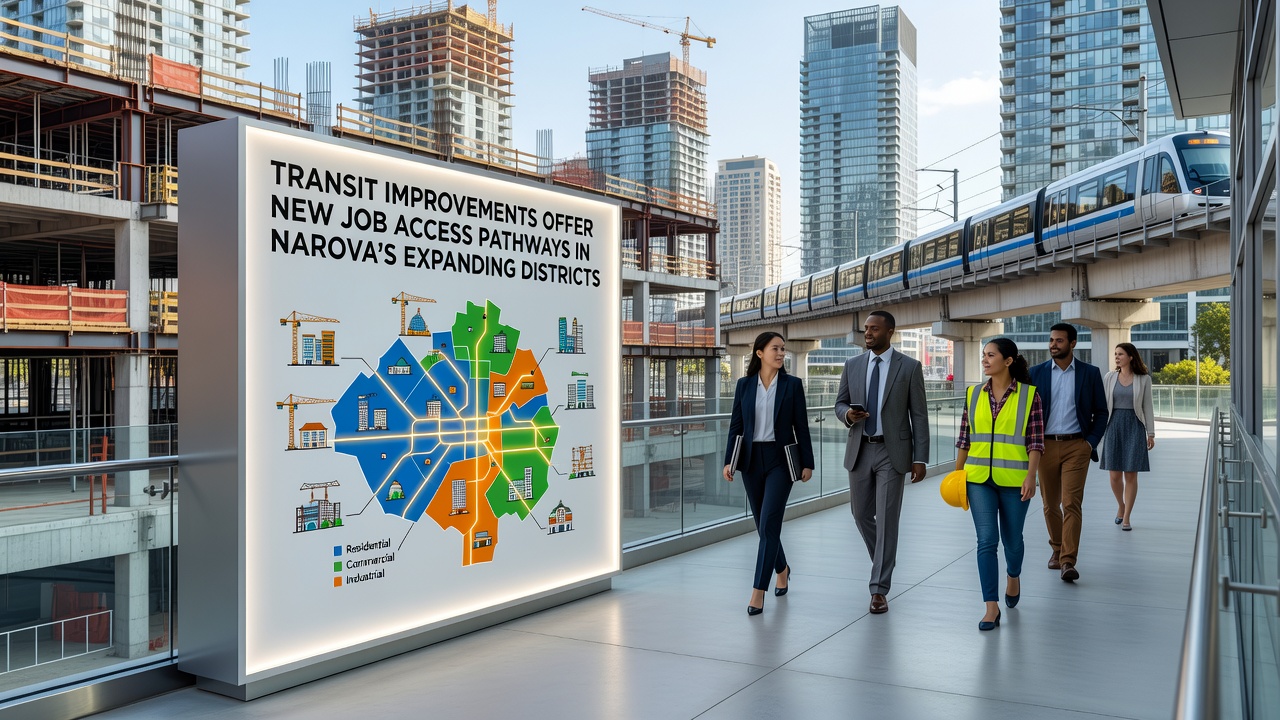
Transit upgrades across Narova's growing districts have created direct connections between residential zones and employment centers since planning phases wrapped up earlier this decade. New bus rapid transit corridors, expanded cycling networks, and synchronized rail timetables now link suburban areas to industrial parks and commercial districts where job growth has accelerated. Data from regional transport authorities show that average commute times for residents in these zones dropped by 22 percent between 2023 and 2025, while employment rates in previously isolated neighborhoods rose by 14 percent according to labor market statistics released in early 2026.
Key Infrastructure Additions
Engineers completed the eastern corridor extension in March 2025, adding 18 kilometers of dedicated bus lanes that serve three newly developed districts. The project incorporated real-time tracking systems and priority signaling at 47 intersections, which reduced delays during peak hours. Parallel investments in protected bike lanes along the same route allow residents to combine cycling with transit for the final leg of their journeys, and park-and-ride facilities at four stations provide 2,400 spaces for those arriving by car from farther outlying areas.
September 2026 marks the scheduled activation of an integrated fare system that unifies ticketing across bus, rail, and shared micromobility operators. Officials expect the change to eliminate the need for multiple transfers and payments, which currently affect 38 percent of riders who travel between districts and the city core. Preliminary modeling by the regional mobility agency projects an additional 9 percent increase in daily public transport usage once the unified system goes live.
Employment Access Outcomes
Researchers at the Narova Institute of Urban Studies tracked 1,200 residents before and after the corridor opening and found that 31 percent secured jobs they previously could not reach within a reasonable commute window. The study, published in the Journal of Transport Geography, noted that access to logistics and manufacturing positions increased most sharply because those sites cluster along the new route. Participants reported saving an average of 47 minutes each workday, which translated into higher workforce participation among caregivers and part-time workers who previously faced scheduling conflicts.
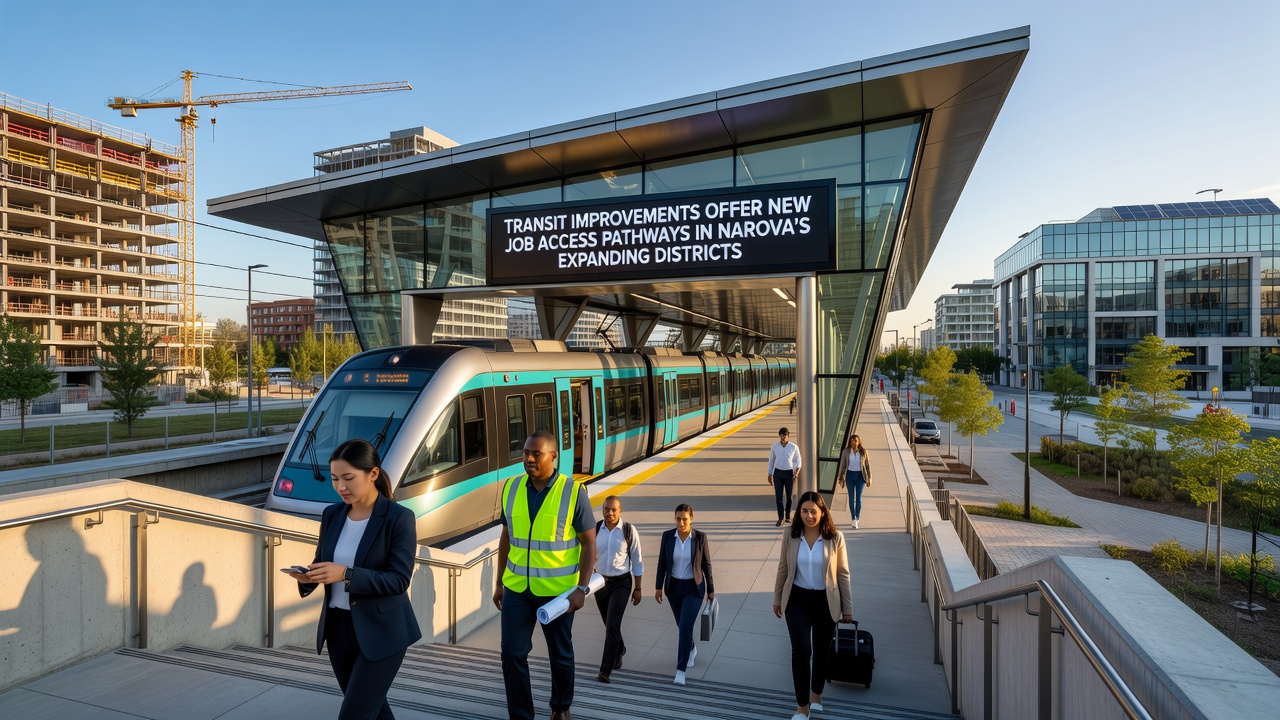
Similar patterns appear in other expanding zones where feeder services now connect to the main corridor. Employment data compiled by the municipal statistics office indicate that districts served by the new lines added 4,800 jobs between mid-2024 and the first quarter of 2026, outpacing growth in comparable areas without upgraded transit. Local employers in warehousing and light industry report filling vacancies 19 percent faster since reliable transit options expanded, reducing reliance on company shuttles that had limited operating hours.
Broader Regional Context
These Narova improvements align with wider European efforts to tie land-use planning with transport investment. A 2025 report from the European Commission on sustainable urban mobility highlights how coordinated infrastructure spending can unlock labor markets in secondary cities. Narova's approach, which pairs transit construction with zoning changes that allow higher-density housing near stations, mirrors strategies already implemented in several mid-sized EU urban areas.
Observers note that ridership on the eastern corridor reached 18,500 daily boardings within six months of launch, exceeding initial forecasts by 11 percent. The surplus revenue has funded additional evening and weekend service, further extending job access for shift workers. Meanwhile, cycling counts along the parallel bike lanes have climbed steadily, with automatic counters recording 3,200 trips per weekday by spring 2026.
Conclusion
Continued monitoring through 2027 will measure whether the September 2026 fare integration sustains these gains and whether adjacent districts experience comparable benefits once connecting services improve. Current figures already demonstrate measurable expansion of job reach for residents in Narova's growing areas, supported by infrastructure delivered on schedule and usage patterns that exceed projections.